


What is 1.6523 (20NiCrMo2)
The steel 1.6523 is used for many parts in mechanical engineering that are case hardened. Here, and as well as with other case-hardening steels (for example 1.6587), the emphasis is placed on a hard surface and a tough core, which in turn leads to good wear properties.
The materials 1.6523 and 1.6526 are identical in their technical properties and differ only in the sulfur content, which facilitates the machining process.
1.6523 is popularly known as AISI 8620.
International identifiers
Properties of the material 1.6523 (20NiCrMo2)
Properties
| Weldability | good weldable |
| Machinability | good |
| Toughness | very good |
| Corrosion resistance | low |
| Wear resistance | good (in the cured state) |
Physical properties
| Density in kg / dm3 | 7,75 |
| Electrical resistance at 20°C in (Ω mm2)/m | 0,12 |
| Elasticity modul (103 MPa) | 210 |
| Thermal conductivity at 20°C in W/(m K) | 46 |
| Specific heat capacity at 20°C in J/(kg K) | 430 |
Mechanical properties
Soft annealed: Brinell hardness: < 212 HB
Processing
| Nitriding | is possible |
| Machining works | is possible |
| Flame hardening | is not possible |
| Induction hardening | is not possible |
Calculate the weight quickly and easily
Heat treatment 1.6523
Hot forming
Temperature range: 1100–850 °C
Example: Forging
Subsequent air cooling
Normalizing
Temperature: approx. 910 °C
Subsequent air cooling
Improves machinability
Can also be carried out before case hardening
Soft annealing
Temperature: 650–700 °C
Subsequent slow cooling in the furnace
Quenching and tempering
Temperature: 840–870 °C
Quenching in oil or air, depending on the cross-section
Tempering
Temperature: 200–700 °C
Improves toughness with minimal impact on hardness
Chemical composition of 1.6523
| 1.6523 20NiCrMo2 | C | Si | Mn | P | S | Cr | Mo | Ni |
|---|---|---|---|---|---|---|---|---|
| min. | 0,17 | 0,65 | 0,35 | 0,15 | 0,40 | |||
| max. | 0,23 | 0,40 | 0,95 | 0,025 | 0,035 | 0,70 | 0,25 | 0,70 |
Areas of application for 1.6523
Instructions for use
- Suitable for components subject to light to moderate loads.
- Suitable for components requiring high surface wear resistance.
- Suitable for components with good core strength and high impact toughness.
- Suitable for mechanically stressed components with high wear resistance requirements.
Areas of application
- Automotive engineering
- Mechanical engineering
- Gear manufacturing
- Manufacturing of camshafts
- Production of racks and guide pins
- Manufacturing of sleeves, bearings, and bushings
- Production of components for light to moderate loads
Form of supply and availability of 1.6523
In stock
Immediately available from stock
Form of supply
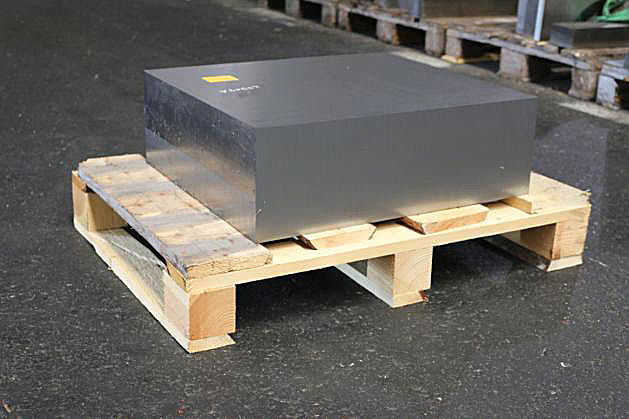
Flat steel, forged, annealed
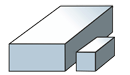
Sawn blank
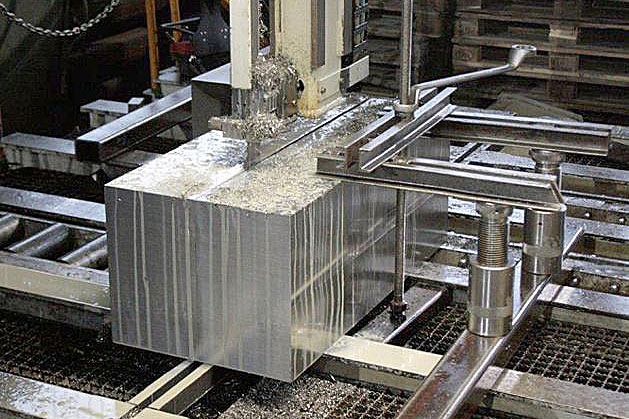
The processing with the saw is a mechanical processing of the material, which results in a significantly lower unintended deformation and increased hardness for the existing structure, such as the thermal cutting. Thus, the machined workpiece has a homogeneous structure even at the edge, which does not change in the continuation of the material.
This circumstance allows immediate finishing of the workpiece with milling or drilling. So it is not necessary to anneal the material or make a similar operation beforehand.
Frequently asked questions about material 1.6523:
It is an alloyed case-hardening steel (also known as carburizing steel), characterized by a good combination of high surface hardness (after case hardening) and a tough core.
It is primarily used for highly stressed machine components in mechanical and automotive engineering that require a wear-resistant surface and a tough core. Typical examples include gears, transmission shafts, axles, bolts, and clutch components.
Notice: Specifications contained in following data sheet are provided as a description, liability is excluded!