


What is 1.7707 (30CrMoV9)
The material 1.7707 (30CrMoV9) is a Cr-Mo-V alloyed quenched and tempered steel with high wear resistance, good toughness and reliable mechanical properties. Due to its good hardenability and suitability for nitriding, it is particularly suitable for components requiring high surface hardness and load-bearing capacity.
The material 1.8519 | 31CrMoV9 is directly comparable and interchangeable with this material.
International identifiers
Properties of the material 1.7707 (30CrMoV9)
Special properties
quenched and tempered
Weldability: bad
Physical properties
| Density (kg/dm3) | 7.73 |
| Modulus of elasticity (103 MPa) | 210 |
| Electrical resistivity at 20°C (Q mm2/m) | 0.19 |
| Thermal conductivity at 20°C (W/m K) | 43.0 |
| Specific heat capacity at 20°C (J/kg K) | 432 |
| Coefficient of thermal expansion (10-6 m/(m K)) | 11.5 (20°C to 100°C) |
Calculate the weight quickly and easily
Heat treatment 1.7707
Chemical composition of 1.7707
| 1.7707 30CrMoV9 | C | Si | Mn | P | S | Cr | Mo | Ni | V |
|---|---|---|---|---|---|---|---|---|---|
| min. | 0,27 | 0,4 | 2,3 | 0,15 | 0,1 | ||||
| max. | 0,34 | 0,4 | 0,7 | 0,035 | 0,04 | 2,7 | 0,25 | 0,6 | 0,2 |
Areas of application for 1.7707
Instructions for use
- For components with high requirements for wear resistance and load-bearing capacity
- Suitable for mechanically highly stressed components
- Good hardenability and reliable mechanical properties
- Particularly suitable for components requiring high surface hardness and wear resistance
- Good machinability in the soft-annealed condition
- Only conditionally weldable; not recommended for welded structures
Areas of application
- Mechanical engineering
- Automotive engineering
- Automotive industry
- Crankshafts and camshafts
- Screws and bolts
- Gears and shafts
- Extruder tools, screws and cylinders
- Spindles and guides
- Hot steam valve components
- Wear-resistant components
Form of supply and availability of 1.7707
In stock
Immediately available from stock
Form of supply
Flat, forged, quenched and tempered
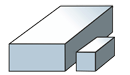
Sawn blank
The processing with the saw is a mechanical processing of the material, which results in a significantly lower unintended deformation and increased hardness for the existing structure, such as the thermal cutting.
Thus, the machined workpiece has a homogeneous structure even at the edge, which does not change in the continuation of the material.
This circumstance allows immediate finishing of the workpiece with milling or drilling . So it is not necessary to anneal the material or make a similar operation beforehand.
![[Translate to Englisch:]](/fileadmin/user_upload/produkt-fotos/1.7707_Flachstahl.jpg "[Translate to Englisch:]")
![[Translate to Englisch:]](/fileadmin/user_upload/produkt-fotos/1.7707_Stahlzuschnitt.jpg "[Translate to Englisch:]")
Frequently asked questions about material 1.7707:
They are nearly identical and directly interchangeable. Both are high-strength chromium-molybdenum-vanadium steels (CrMoV) with the same alloy base. The only minor difference is the carbon content: 1.7707 (30CrMoV9) has a nominal carbon content of 0.30%, while 1.8519 (31CrMoV9) is standardized at 0.31%. In practice, both steels offer excellent through-hardening properties, extremely high wear resistance and are perfectly suited for nitriding to achieve surface hardnesses of up to 800 HV.
For high-strength fasteners, camshafts and special screws that must withstand extreme tensile loads.
Through nitriding, as the chromium and vanadium contained in the steel form extremely hard special nitrides on the component surface.
Notice: Specifications contained in following data sheet are provided as a description, liability is excluded!